Râsu'-plânsu'
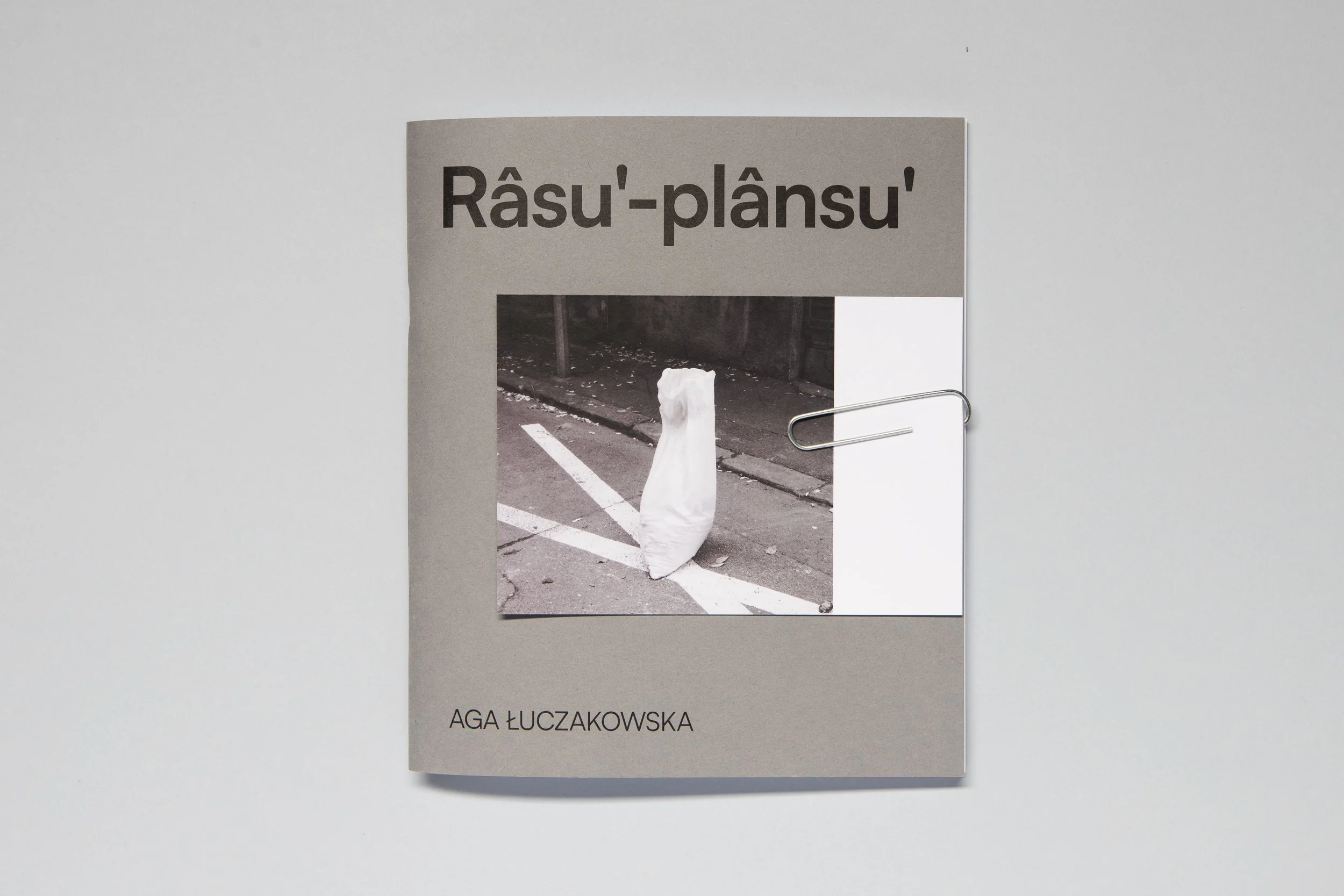
The book explores the Romanian concept of Râsu'-plânsu' (“laughing through tears”), capturing the coexistence of humor and sorrow in everyday life. It examines how residents relocated to uniform communist-era apartment blocks during Nicolae Ceaușescu’s systematization program creatively adapted their surroundings, enclosing balconies, marking informal boundaries, and personalizing shared spaces to preserve a sense of home, community, and individuality. Through these small, everyday actions, the book reveals how people humanize rigid, impersonal urban environments and respond to imposed structures.
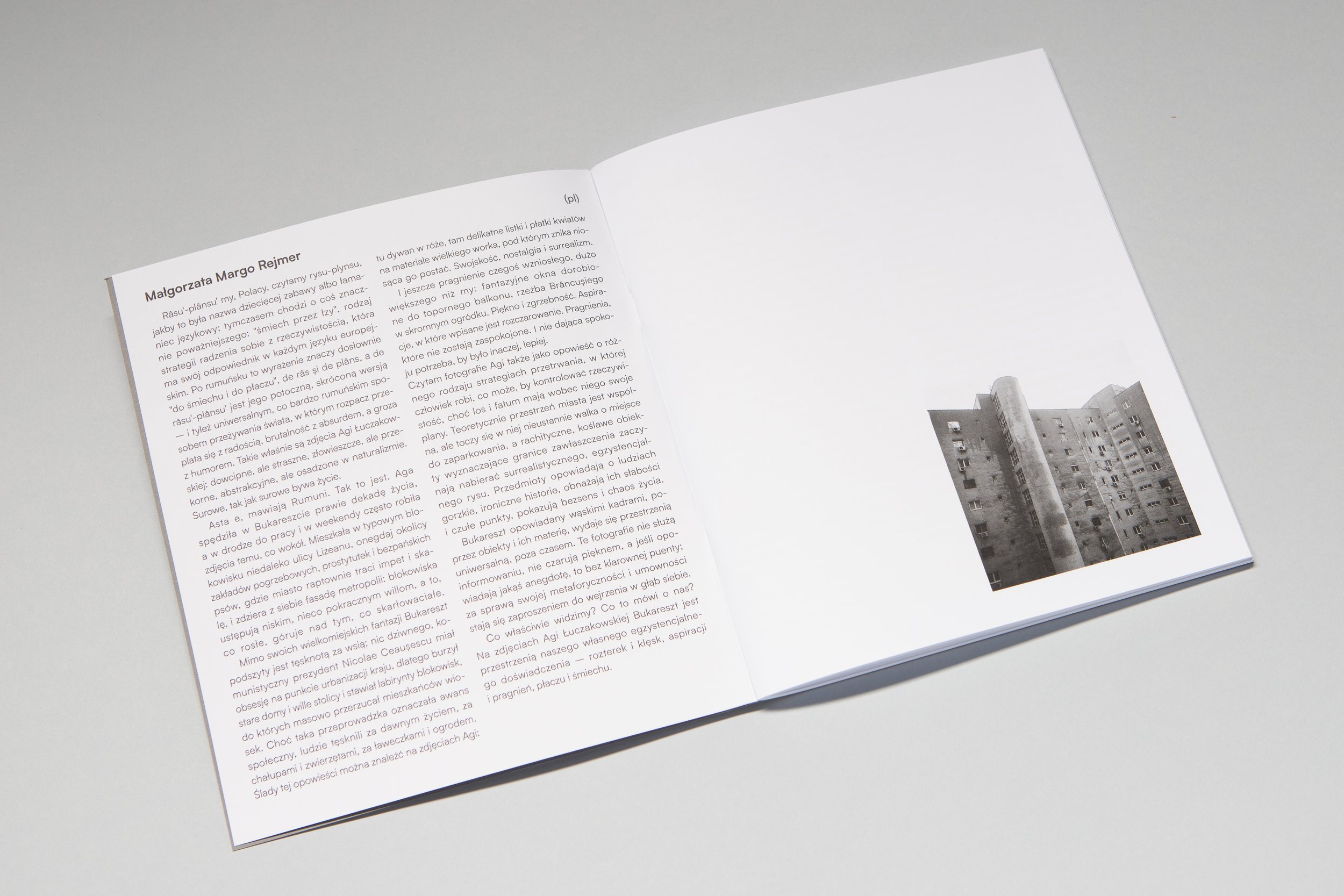
The publication includes a foreword by Małgorzata Margo Rejmer.
This publication was made possible thanks to the support of Katowice Miasto Ogrodów, Instytucja Kultury im. Krystyny Bochenek.
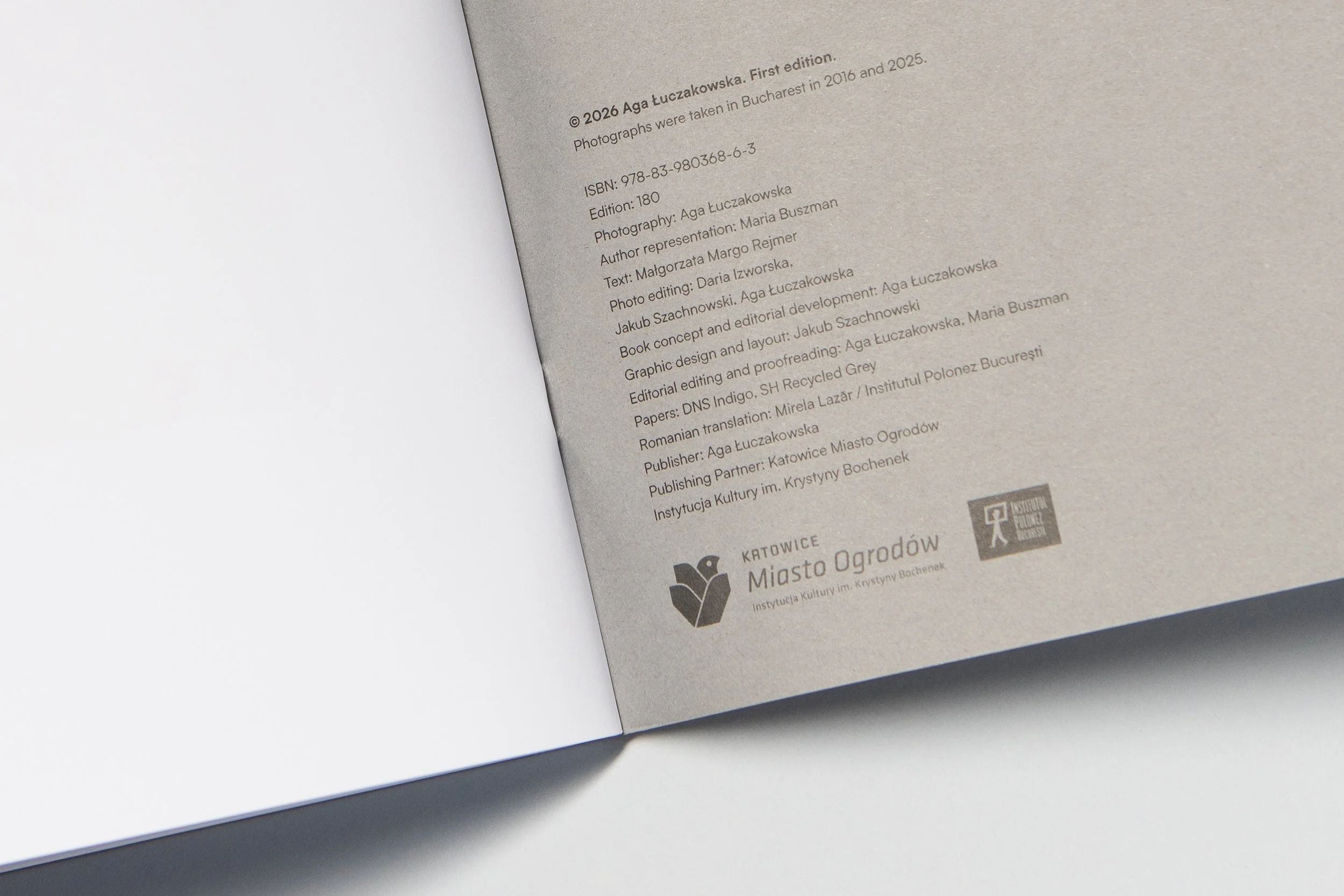
ISBN: 978-83-980368-6-3
Edition: 180
Photography: Aga Łuczakowska
Author representation: Maria Buszman
Foreword: Małgorzata Margo Rejmer
Languages: Polish, Romanian, English
Photo editing: Daria Izworska, Jakub Szachnowski, Aga Łuczakowska
Book concept and editorial development: Aga Łuczakowska
Graphic design and layout: Jakub Szachnowski
Romanian translation: Mirela Lazăr / Institutul Polonez Bucureşti
Publisher: Aga Łuczakowska
Publishing Partner: Katowice Miasto Ogrodów Instytucja Kultury im. Krystyny Bochenek
© 2026 Aga Łuczakowska. First edition.
Please check Râsu'-plânsu' Interventions . The project expands my photographic book Râsu'-plânsu'.
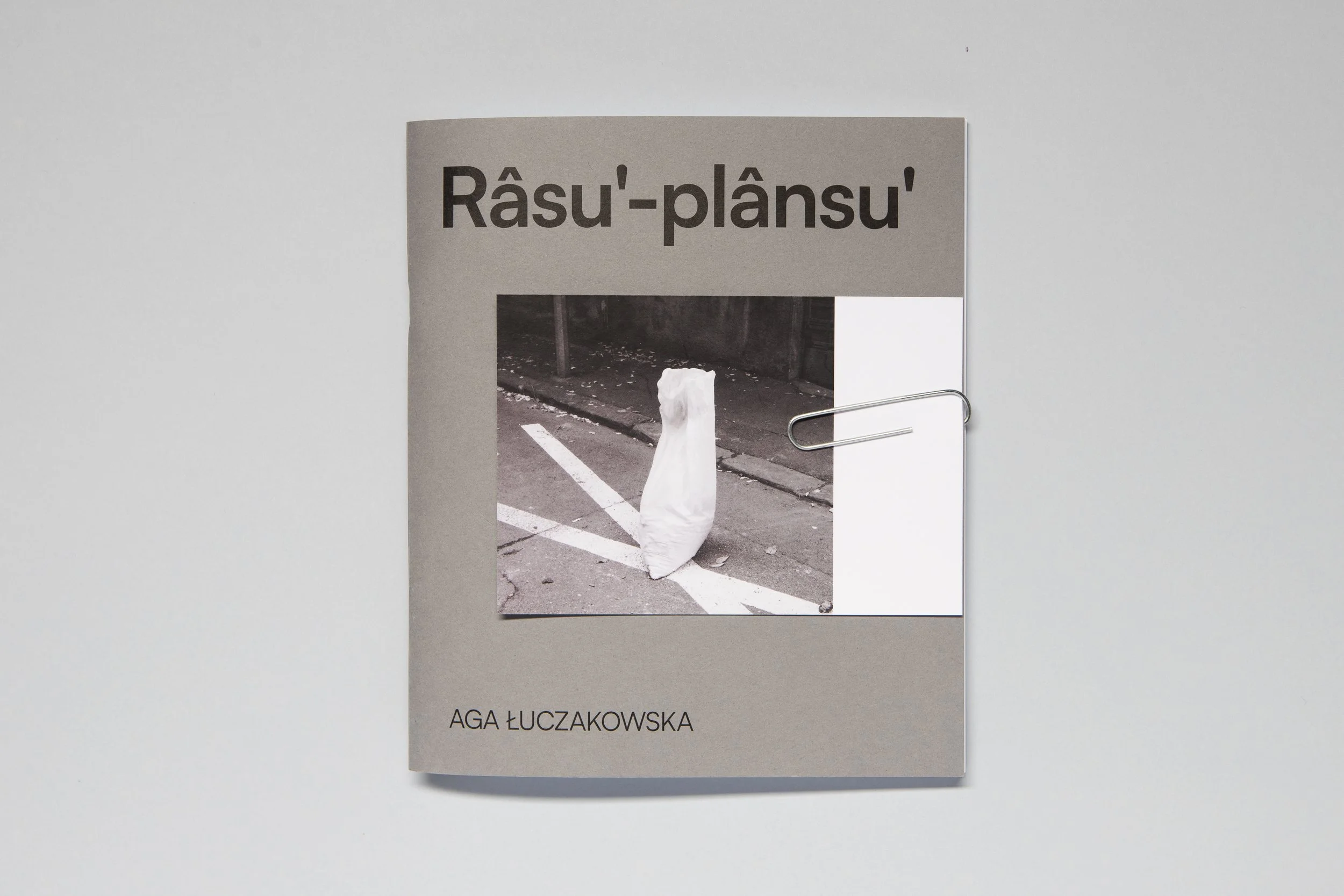
The book explores the Romanian concept of Râsu'-plânsu' (“laughing through tears”), capturing the coexistence of humor and sorrow in everyday life. It examines how residents relocated to uniform communist-era apartment blocks during Nicolae Ceaușescu’s systematization program creatively adapted their surroundings, enclosing balconies, marking informal boundaries, and personalizing shared spaces to preserve a sense of home, community, and individuality. Through these small, everyday actions, the book reveals how people humanize rigid, impersonal urban environments and respond to imposed structures.
The publication includes a foreword by Małgorzata Margo Rejmer.
This publication was made possible thanks to the support of Katowice Miasto Ogrodów, Instytucja Kultury im. Krystyny Bochenek.
ISBN: 978-83-980368-6-3
Edition: 180
Photography: Aga Łuczakowska
Author representation: Maria Buszman
Foreword: Małgorzata Margo Rejmer
Languages: Polish, Romanian, English
Photo editing: Daria Izworska, Jakub Szachnowski, Aga Łuczakowska
Book concept and editorial development: Aga Łuczakowska
Graphic design and layout: Jakub Szachnowski
Romanian translation: Mirela Lazăr / Institutul Polonez Bucureşti
Publisher: Aga Łuczakowska
Publishing Partner: Katowice Miasto Ogrodów Instytucja Kultury im. Krystyny Bochenek
© 2026 Aga Łuczakowska. First edition
For other payment options such as Revolut or BLIK, please contact me directly: agaluczakowska@gmail.com
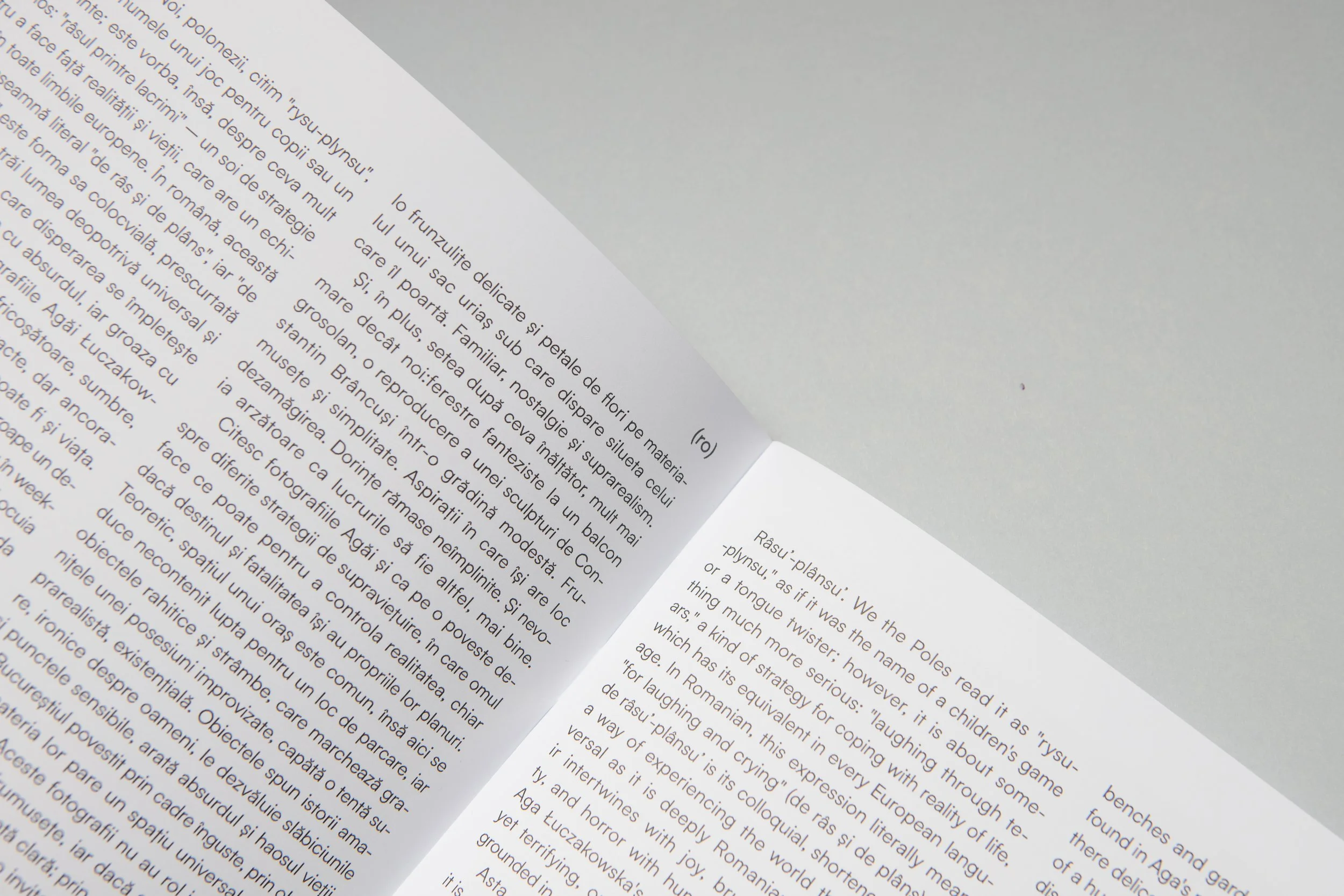
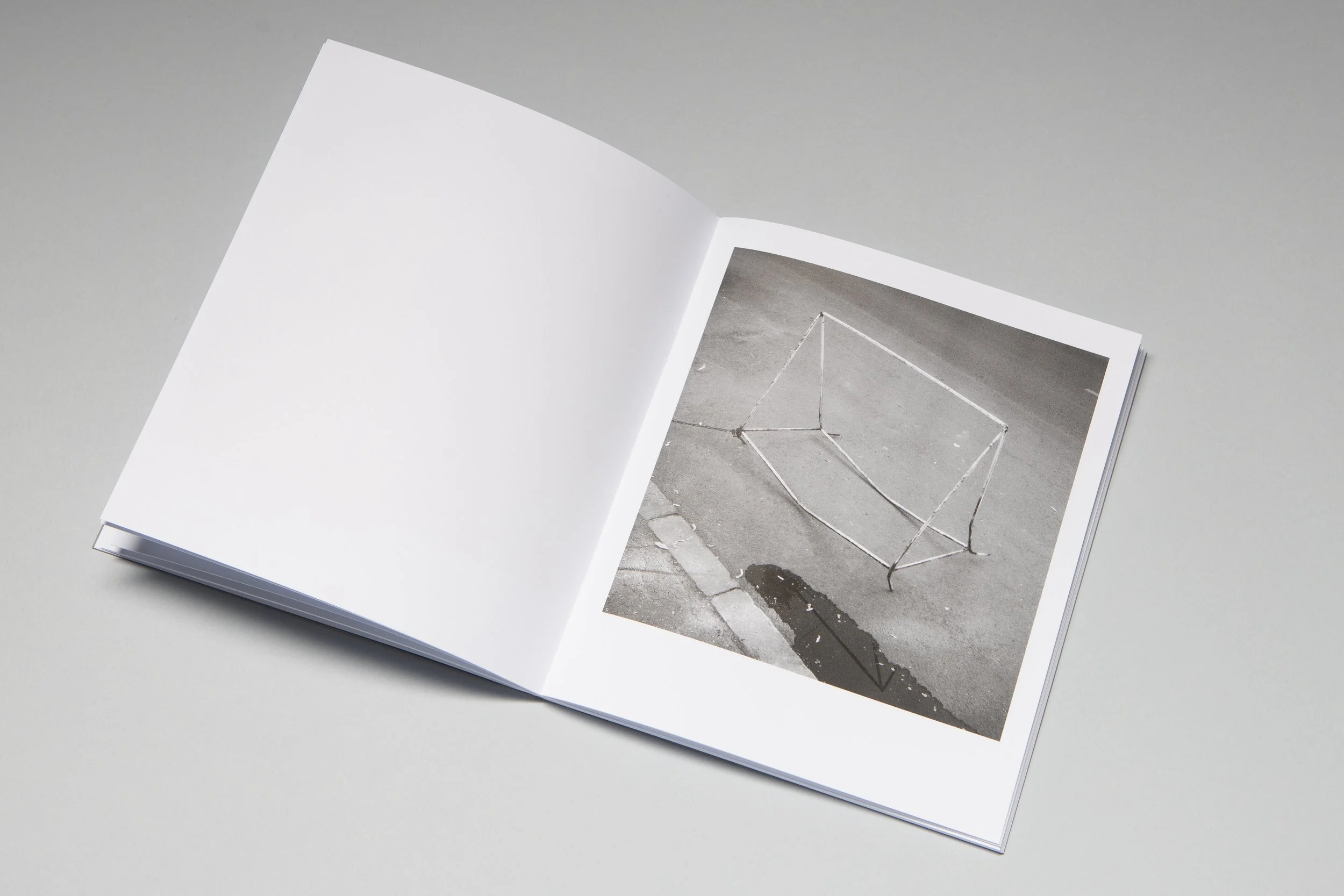
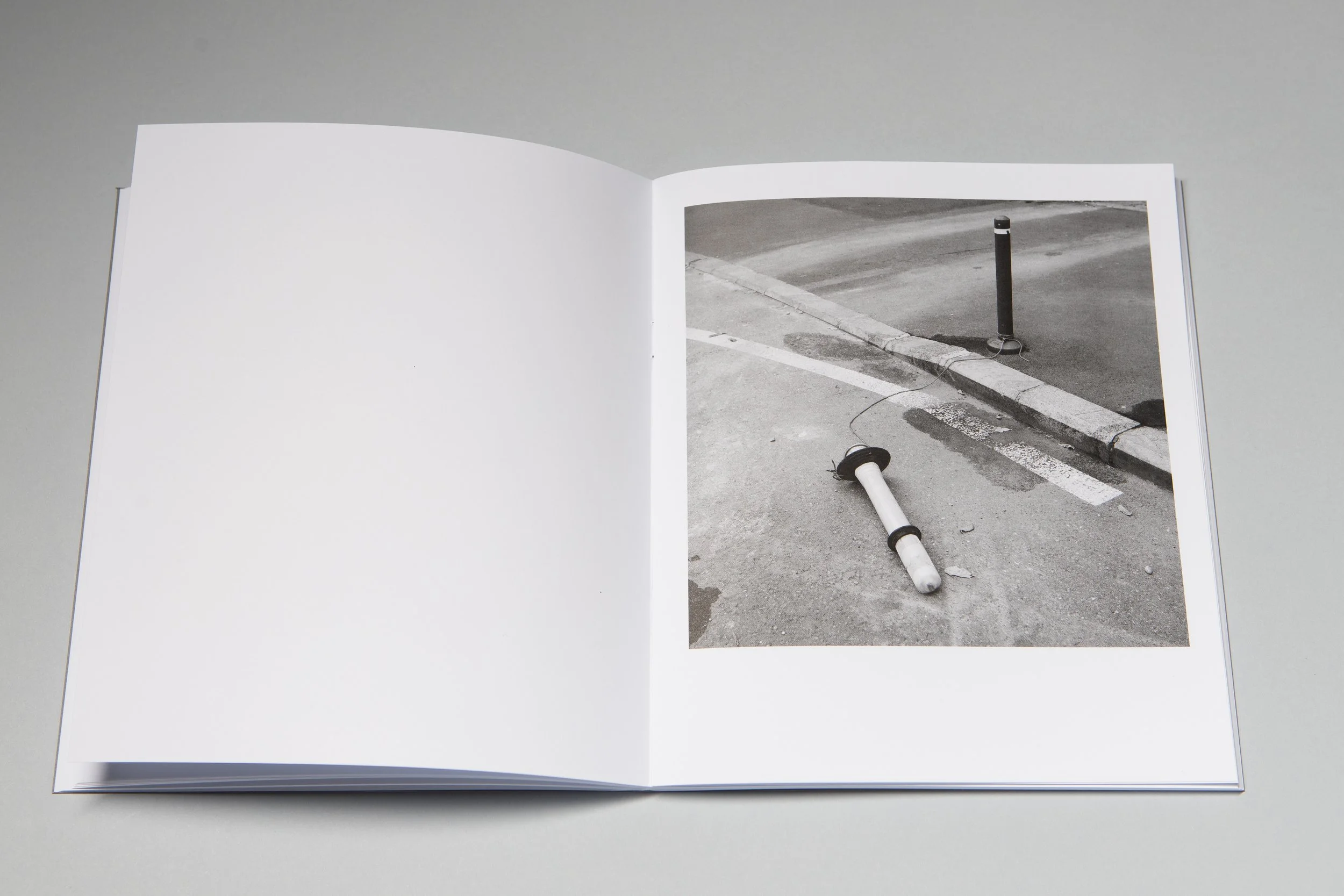
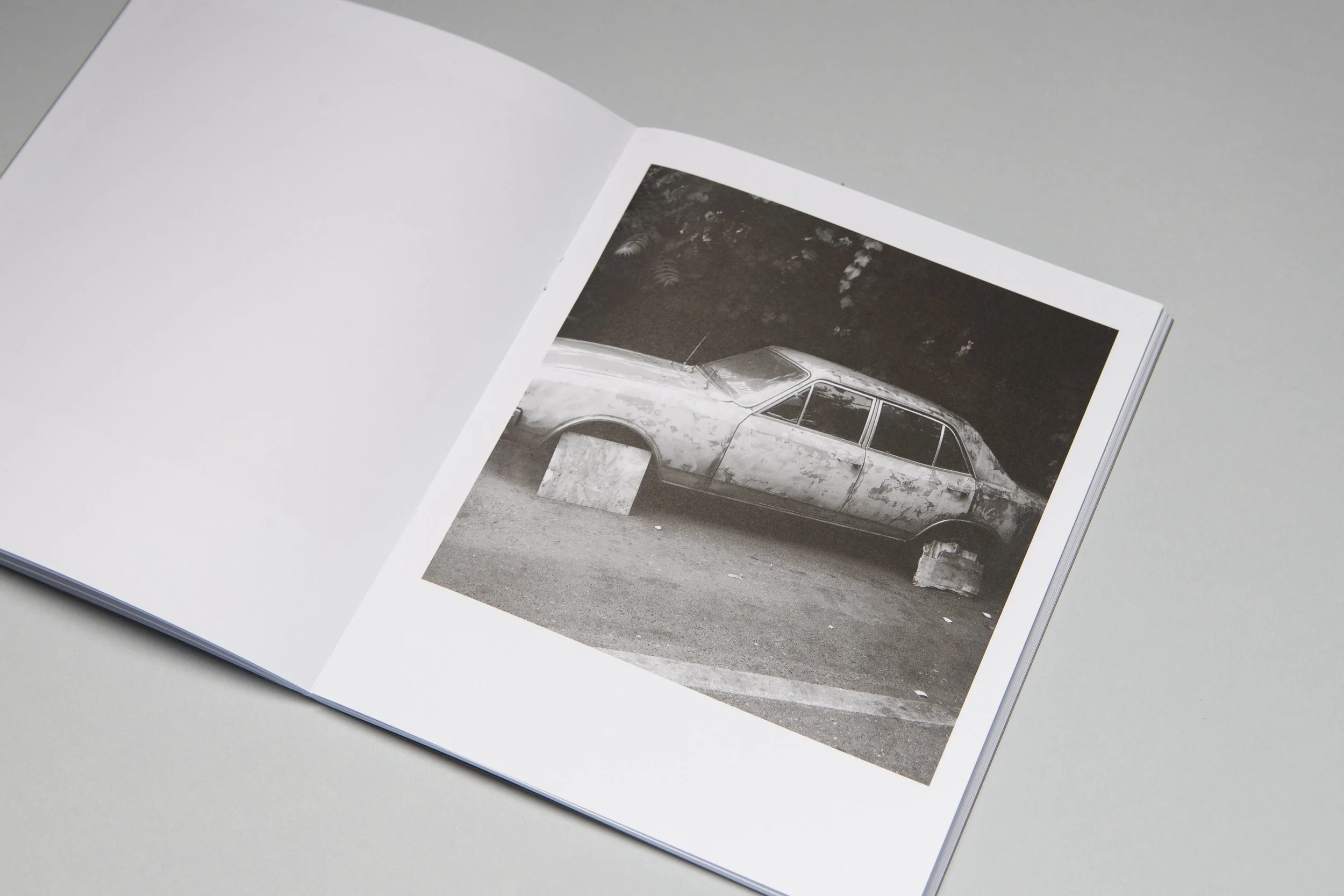
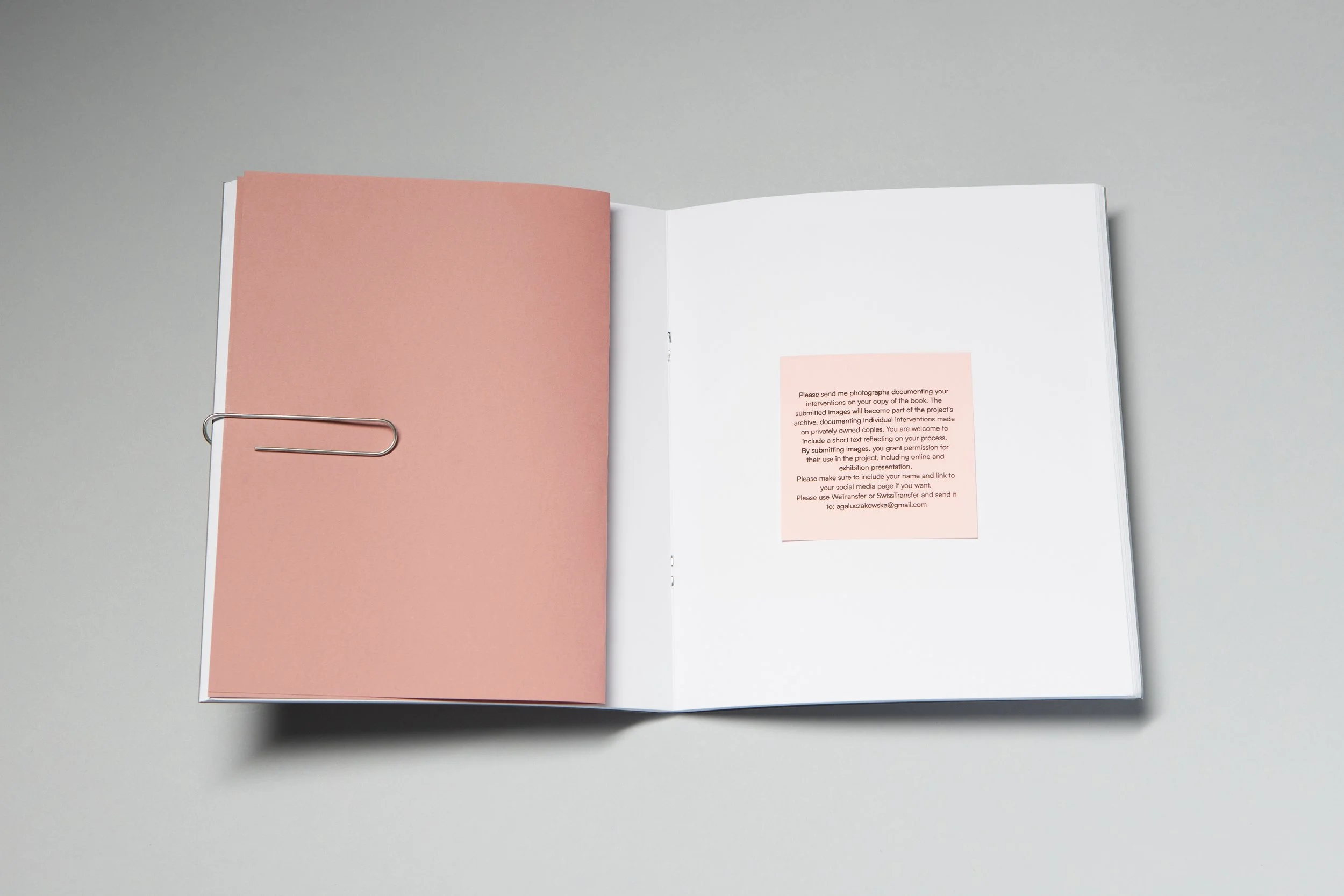
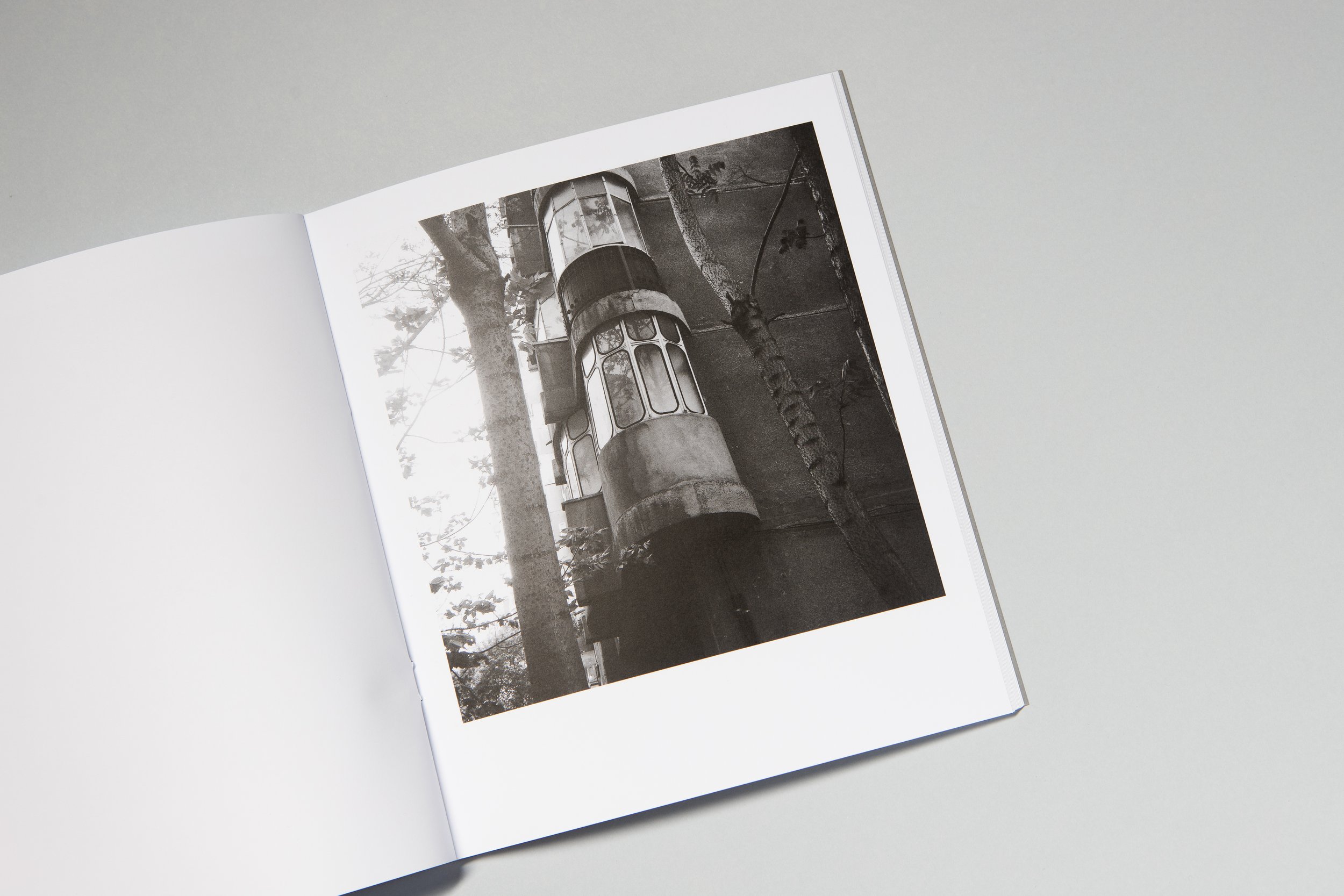
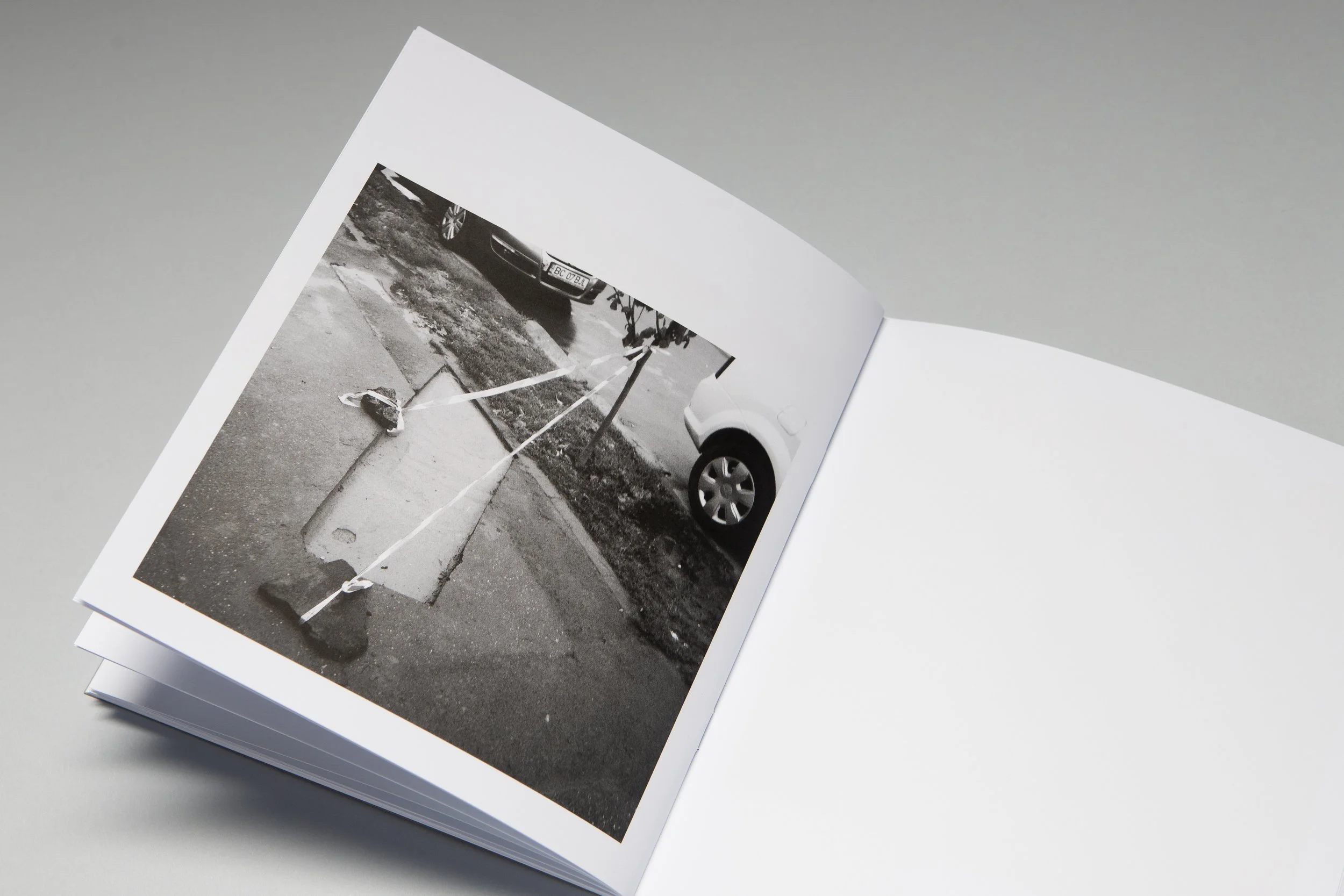
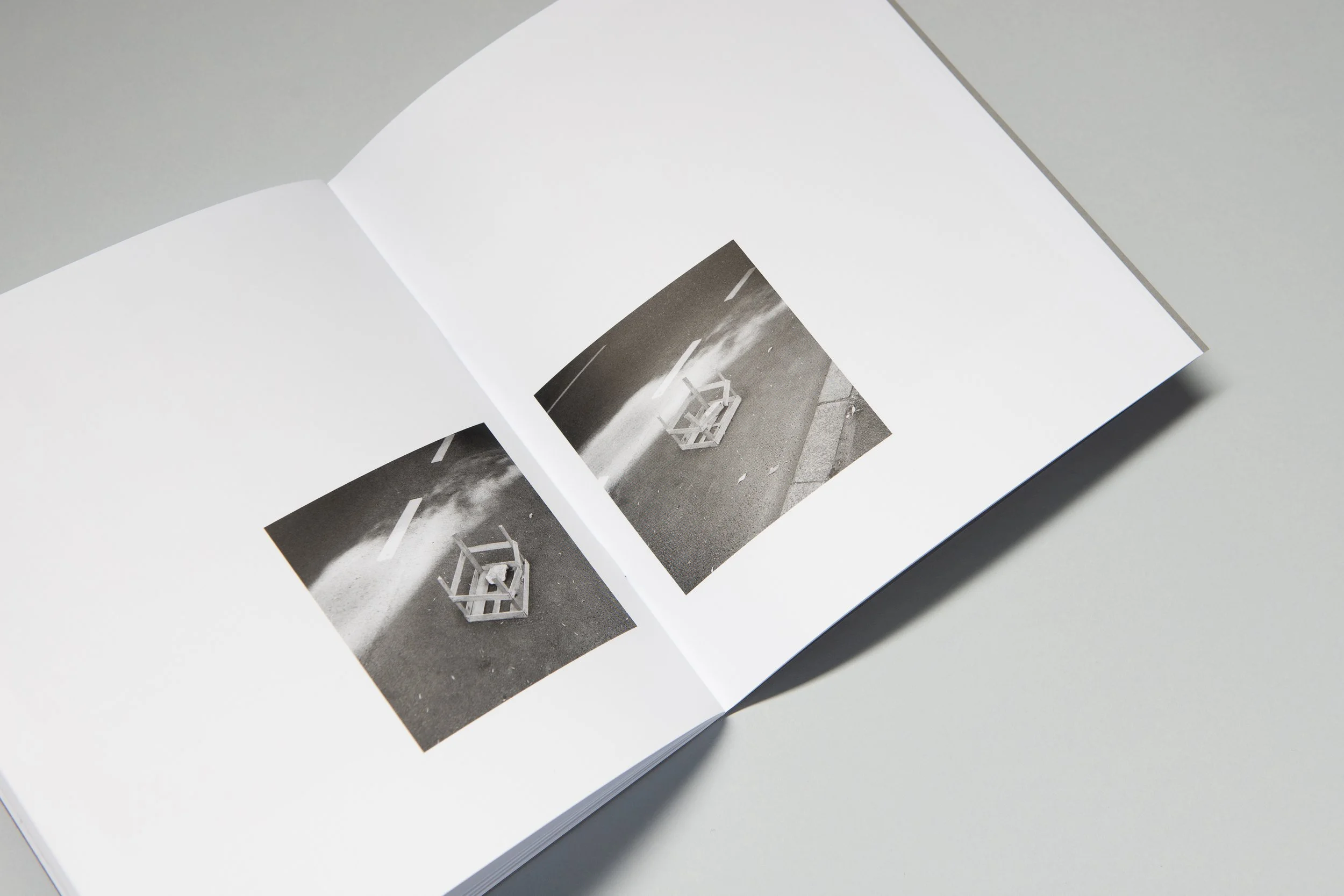
Product photography courtesy of Krzyszof Szewczyk
Reviews
-
A refined, small publication that captivates with its bittersweet atmosphere. The title Răsu’-plânsu’ is Romanian for “laughing through tears” — this duality resonates perfectly in the editorial design. The grey, raw cover contrasts with pink accents: an envelope, a letter inside, and a sticker inviting readers to submit photos that expand the project. The black-and-white photographs document Bucharest through the lens of the artist’s daily commute from home to work, a route she traveled for nearly a decade. Łuczakowska abandons the façade of the big city in favor of something more authentic and full of humor. This is brilliantly conveyed through sharp, witty juxtapositions of frames — such as monstrously bird-dropping-covered cars contrasted with the immaculate white of a whitewashed fruit tree trunk. The same white, completely different contexts. As Małgorzata Margo Rejmer aptly writes in the introductory text, this photographic Bucharest is deeply infused with a longing for the countryside. The legacy of Ceaușescu, who demolished old villas to make way for labyrinths of housing blocks, forced resettled residents into a brutal break from their former lives. The human need to domesticate concrete is visible in the photographs through small survival strategies — floral curtains, plant motifs on bags, or whimsical windows embedded into clumsy balconies. Rickety fences and the chaos of everyday urban life blend the sacred with the profane. Łuczakowska’s narrow, intimate frames not only depict the Romanian capital, but also become a universal mirror of our own existential dilemmas, desires, tears, and laughter.
Aleksandra Śliwczyńska-Kupidura, Kwartalnik Fotografia
-
"When I was Director of Photography at National Geographic I often conducted workshops and spoke to groups of photographers. I often said that photography isn't about shooting pictures, it's about seeing. In the case of this book Aga's photography is about seeing and feeling the subject. Most photographers would approach the subject of the apartment blocks by showing the typical street scenes with the people living in the blocks. In Aga's photographs she has shown artifacts of the people, and in so doing have shown the people themselves. Having been to some of these areas in Bucharest, I've never seen them the way they are shown in Aga's book. She has a great eye, and true dedication to her work."
Kent Kobersteen, Director of Photography and Senior Editor at National Geographic magazine from February 1998 until January 2005
-
"I loved the photographs. Chaotic, raw in black and white, yet also surreal and methodical. In a way they seem to dream of shapes that repeat and move. "
-
"Sometimes you come across something or someone you didn't anticipate. I did that last year. Aga's images hit me even though I didn't ask for it. I therefore ordered the book she released (...). The book contains images of everyday life, more or less. There are millions of those kind of images. But Aga's images keep coming back. She has a certain way of seeing that intrigue and fascinate me. "
-
If it were only about the pictures, this would already be a great book: But it's the tiny pink slip inside that turns readers to collaborators, that makes this special. The "Interventions" work against the impulse to close up the book and turn it into something untouchable and sacred and the reader into a mere consumer. Instead, you are invited, to make this book you own - mirroring the gesture of the Bucharest's people to reclaim their own space in the city with tiny gestures of personal anarchy. Get your copy, intervene!
-
Interventions in space, in the very fabric of a place, at once charged and subtle, jarring and oddly familiar A presence that stirs long forgotten memories of things caught in passing, profound in their banality There is life to be found in the ordinary Poetry in the disjointed, the decayed and the broken Objects left to linger beyond their use until they become something else entirely, sculptural oddities performing in quiet corners of the city where nobody really goes - Nature looks on aghast at this misrepresentation of material and form, each one a folly, an ode to the silent crushing forces of time Man made forms that fail in attempts to echo not natural forms but the strength of nature itself Flora stands tall, unnerved, unmoved, beholden to none, whilst metal and plastic and rubber decay in their state of disuse and discard and turn to dust again - In the end nothing lasts and only copies remain to tell these stories -
Alex Prior, @photobook_reviewer